
Fort William
Here is the honest version: Fort William the town is not the attraction. It is a working Highland place of about 10,000 people with a pedestrianised high street, an aluminium smelter at one end and a bypass between it and its own loch. What makes it worth three or four nights is the radius. Ben Nevis starts on its doorstep, the UK's only mountain gondola is ten minutes away, the Jacobite steam train leaves from the station and crosses the Glenfinnan Viaduct, Glencoe is twenty minutes south and the Road to the Isles runs west to Mallaig and the Skye ferry. Base yourself here, and spend your days somewhere else.

Written by Ali Murray
The person behind Make It Scotland · Updated 27 August 2026
Things to do in Fort William
Twelve things worth a day, running from the mountain outwards. Everything below was checked on the operators' own sites in August 2026. Two things that catch people out every summer: the Jacobite steam train sells out months ahead and only sells returns, and Glenfinnan's car parks are the worst pinch point in Lochaber, with the National Trust for Scotland warning that illegally parked cars may be towed.
1. Ben Nevis
The highest mountain in the British Isles at 1,345 metres, and around 130,000 people go up it every year. The Mountain Track, still widely called the Tourist Route, starts from the Glen Nevis Visitor Centre or from Achintee by the Ben Nevis Inn and climbs about 10.5 miles there and back with 1,352 metres of ascent, which is essentially the full height of the mountain because the path begins at roughly 20 metres above sea level. Allow six to nine hours. It is a walk rather than a climb, and it is also a serious mountain day that catches people out every year.
Practical: The summit plateau is the dangerous part, not the climb. Mountaineering Scotland publishes actual compass bearings for the descent: from the summit cairn go 150 metres on a bearing of 231 degrees to clear Gardyloo Gully, then follow 282 degrees down towards the zigzags. Five Finger Gully, which walkers stray into when they steer too wide to avoid the North Face, has been the scene of many fatalities. Carry a map and compass and know how to use them, take at least two litres of fluid each, and add an ice axe and crampons any time snow is lying, which on Ben Nevis can be most of the year. Parking at the Glen Nevis Visitor Centre is charged by the hour up to £6 for 24 hours on the Highland Council tariff, though the centre's operator quotes £8 a day, so bring more than you think. Checked August 2026.
2. Nevis Range and the gondola
Seven miles north of the town, the only mountain gondola in the UK carries you up Aonach Mor to a top station at 650 metres, where there is a restaurant and two waymarked viewpoint walks: Sgurr Finnisg-aig and Meall Beag, which together make 2.5 miles with 127 metres of ascent and an hour or two of walking. The view down the Great Glen and out over Loch Linnhe is the one you came for. In winter this is a ski centre, though recent seasons have been difficult: in January 2026 an unexpected gearbox fault took the gondola out for emergency repair in the middle of the ski season, so check the mountain status page before you plan a winter trip around it.
Practical: 2026 gondola day passes are £28.95 adult, £14.95 junior (5 to 17) and £22.95 for under-26s and over-65s, with a family of two adults and two children at £62.95; two and three-day passes and a season pass running February to February all cost less per day. Mountain bike uplift is separate, from £28.95 online for a single trip. Check the mountain status page before you drive out, and check the time of the last gondola down so you are not stranded at the top. The downhill mountain bike track here is a World Cup venue: 2.82km long, dropping 555 metres, with riders hitting 80km/h, and Fort William hosted the downhill events of the 2023 UCI Cycling World Championships. Checked August 2026.
3. The Jacobite steam train
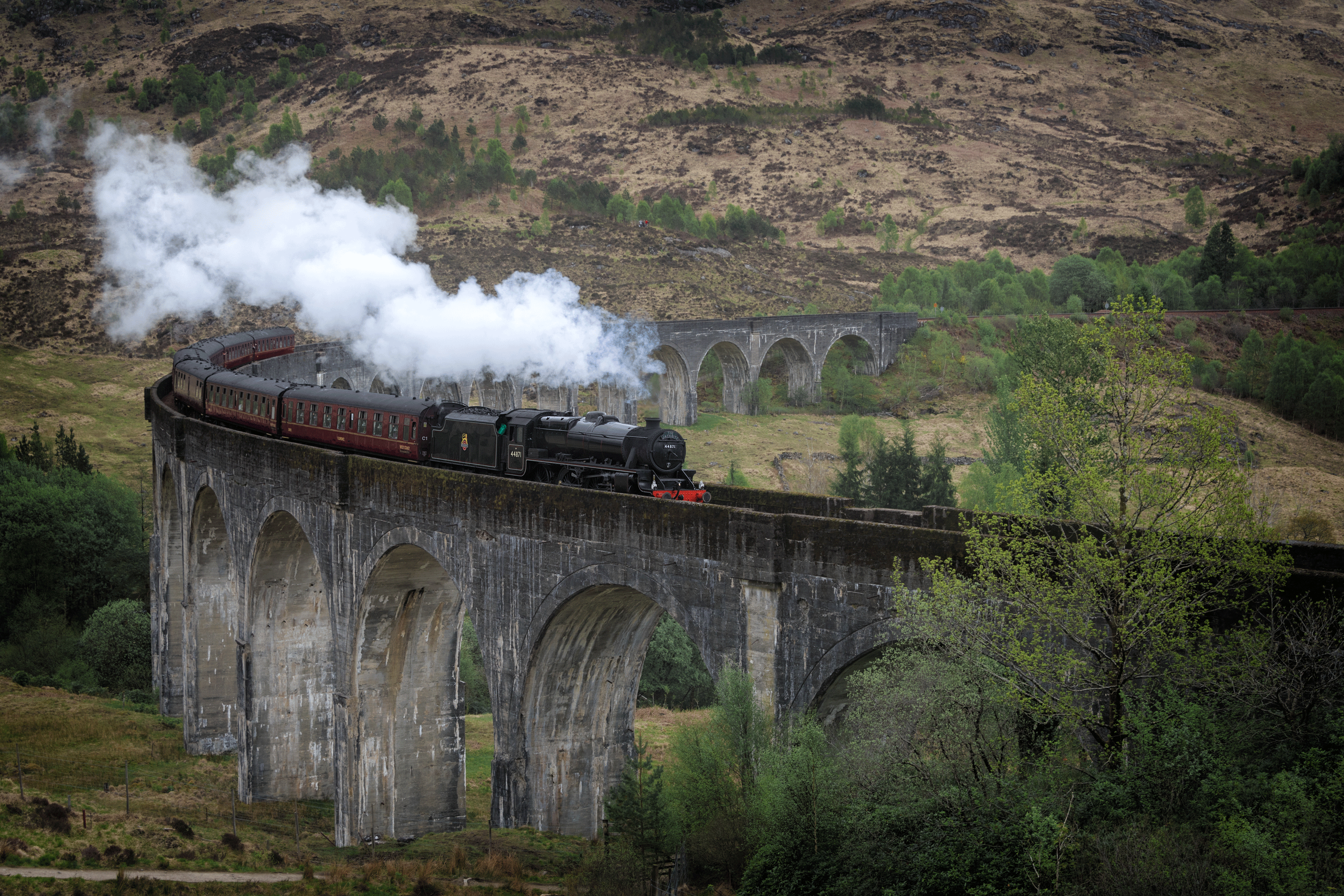
The 84-mile return run from Fort William to Mallaig, over the Glenfinnan Viaduct, along Loch Eilt and down to the sea at Arisaig. It is the most famous train journey in Britain and it deserves it. There are two services a day in high summer, and you get around an hour and three-quarters in Mallaig at the far end.
Practical: The 2026 morning service runs seven days a week from 1 June to 23 October, leaving Fort William at 10.15am and getting back at 4.03pm. The afternoon service runs from 10 June to 25 September, out at 12.50pm and back at 6.52pm. Fares are return only, with no one-way tickets: £76 adult standard, £116 adult first class, £43 and £76 for children 16 and under, and each child must travel with a paying adult. The operator's own advice is blunt, "there are not many seats, we would book early, if we were you", and cancellations inside seven days get no refund. A handful of same-day seats are sometimes sold cash only at the station. Time permitting, the train slows on the viaduct. Checked August 2026.
4. Glenfinnan
Where the 1745 rising began: 1,200 Highlanders gathered at the head of Loch Shiel to pledge themselves to Prince Charles Edward Stuart, and the 18-metre monument at the water's edge went up in 1815 in memory of those who died for it. Above the road, the 21-arch viaduct stands 100 feet over the River Finnan, built of concrete in 1901 by Sir Robert McAlpine, and the walk up to the viewpoint is short. It is the busiest half mile in Lochaber when a steam train is due.
Practical: The National Trust for Scotland visitor centre and shop are open 9.30am to 6pm daily, with monument access 11am to 12.30pm and 1.30pm to 4pm. Adult £5, concession and child £4, family £13, Young Scot £1. Car park £5, free for members. Park only in marked bays: the Trust warns that traffic police monitor the area and illegally parked vehicles may be towed, and motorhomes cannot be accommodated in the visitor car park. The viaduct trail is 2.5 miles with 128 metres of ascent, one to two hours. Come well before a train time or well after. Checked August 2026.

5. Steall Falls and Glen Nevis
The road up Glen Nevis is one of the best short drives in Scotland, and it ends at a car park where the Nevis Gorge path starts. It is 2.25 miles there and back with 220 metres of climbing, an hour and a half to two hours, through a gorge and out into a hanging meadow with Steall Falls at the far end, which Walkhighlands puts at 105 metres and third highest in Scotland, though other sources say 120 and second. The three-wire bridge across the river to the ruin is optional and is exactly as alarming as it looks.
Practical: The path is clear and well walked but rough and rocky with steep drops, so wear proper footwear. Parking at the Glen Nevis road end is up to £10 for 24 hours; the Lower Falls car park mid-glen is cheaper and the Polldubh falls there drop about ten metres beside the road bridge. Around 60,000 people a year walk the gorge, so it is not a secret, but it thins out beyond the meadow. Checked August 2026.
6. The West Highland Museum
Free, in Cameron Square just off the high street, and much better than a small town museum has any right to be. The Jacobite collection is the reason to go, and its centrepiece is the secret portrait: what looks like a smear of oil paint on a black board resolves into a portrait of Prince Charles Edward Stuart when you stand a mirrored cylinder in the middle of it, so a Jacobite host could lift the cylinder away if the wrong person walked in. It was found in a London junk shop in 1924 and bought for £8. There is also his tooth, his tartan trews, a bronze death mask cast in Rome, and a copper plate for printing Jacobite banknotes that was never used.
Practical: Admission free. Ten minutes' walk from the bus and railway stations. Check current opening hours with the museum. Checked August 2026.
7. Neptune's Staircase
At Banavie, three miles out, Thomas Telford's eight-lock staircase lifts the Caledonian Canal 19 metres in one flight, and it takes a boat about ninety minutes to work through. It is free, open at all times, and watching a yacht climb a hillside with Ben Nevis behind it is a better hour than that sentence makes it sound. The canal itself runs 60 miles through the Great Glen from Corpach to Inverness, opened in 1822 after about eighteen years and £910,000 against a £474,000 estimate for seven years' work.
8. Old Inverlochy Castle and the Commando Memorial
Old Inverlochy, on the edge of town, is one of the most complete unaltered thirteenth-century castles in Scotland, built by the Red Comyns. It is currently closed and can only be viewed through protective fencing while conservation work goes on, though some of the grounds are open. Nine miles north at Spean Bridge, the Commando Memorial is three bronze commandos on a hillside looking towards Ben Nevis, unveiled by the Queen Mother in 1952, 17 feet tall, with "United We Conquer" on the plinth. It is free, the parking is free, and the view from it is one of the great roadside views in Scotland.
9. The Corpach shipwreck
Five minutes from town on the beach between Caol and Corpach, a fishing boat sits on the shingle with Ben Nevis behind it. The MV Dayspring, later the Golden Harvest, broke its mooring in a storm in 2011 and was guided ashore. Locally it is the Old Boat of Caol, which is what to look for on a map. Free, and best at low tide in soft light.
10. Mallaig and the Silver Sands of Morar
The Road to the Isles runs 41 miles west to Mallaig past Loch Eilt, Arisaig and the white shell-sand beaches at Morar, and it is one of the great drives in Britain. Mallaig is a working fishing port with the boats coming in and the best fish and chips for fifty miles. Four ScotRail trains a day each way take about ninety minutes, one on Sundays, which makes this doable without a car.
Practical: The CalMac ferry from Mallaig to Armadale on Skye runs a summer timetable from 27 March to 18 October 2026. Booking is essential on this route, and CalMac tells even foot passengers to book online in advance. Check-in is 20 minutes for vehicles and 10 for foot passengers. There is no service on 17 October 2026 and several amended timetable days through the summer, so check before you plan around it. Checked August 2026.
11. Ardnamurchan
The most westerly point on the British mainland, and the emptiest place within reach of Fort William: a peninsula of single-track road, oak wood and empty beaches, with a Stevenson lighthouse at the far end. It is a long day, and it is the one people remember.
Practical: The lighthouse is open from 1 April to 31 October, with the coffee shop daily 10am to 4.30pm and the tower open Sunday to Friday 11am to 4pm, closed Saturdays. Tower tours £7.50 adult, £5.50 concession and under-16s, £20 family of four, starting every half hour from 11am to 4pm, and you should phone to book. It is 152 steps and two ladders, no under-5s and no disabled access. The approach is a steep, winding single-track road with a signal-controlled causeway that has no passing places or verges, there is no public transport, and overnight parking is prohibited. Checked August 2026.
12. Loch Arkaig and the Dark Mile
Turn off at the Commando Memorial and the B8004 takes you through the Dark Mile, a stretch of deeply wooded road with moss on the walls, to the Chia-aig Falls and Loch Arkaig beyond. The Woodland Trust bought 1,027 hectares of Caledonian pine forest here in 2016 and is slowly restoring it; the ospreys that nest here have a live camera on them from March to September. There are no toilets and the paths are unwaymarked, which tells you what kind of place it is.
Things to do around Fort William




Where to stay in Fort William
The town has the most beds in the western Highlands and the least character, which is a fair trade if you are here to be out all day. Staying in Fort William itself puts you on the railway line, within walking distance of the Jacobite platform and the museum, and ten minutes from the Ben Nevis path. Glen Nevis, up the road behind the town, is quieter and closer to the mountain. Corpach and Banavie across the water have the view back to Ben Nevis, which is the one on the postcards. Spean Bridge, ten miles north, is smaller and cheaper and puts you nearer Loch Arkaig and the Great Glen.
Book early for June to September, and very early if your trip includes a Jacobite ticket, because everyone else is doing the same. Cabins, pods and bothies are what the area does best. If the town is full, Glencoe is twenty minutes south and Onich and Ballachulish sit between the two.
Places to stay around Fort William


Where to eat
The Ben Nevis Inn at Achintee is a stone byre at the foot of the mountain path and the obvious place to end a Ben Nevis day. Crannog at Garrison West does the seafood the west coast is good at. The Glen Nevis Restaurant is the reliable family option up the glen, and the Black Isle Bar on the high street handles pizza and beer. Beyond those, the pedestrianised high street has the concentration, Corpach and Banavie have a couple worth the drive, and Mallaig at the end of the Road to the Isles has the best fish. Book in summer. If you run a place to eat in Lochaber and want to be found here, get in touch.
Getting there and around
The West Highland Line from Glasgow Queen Street is one of the great railway journeys in the world and it is also just the way to get here: up Loch Long, over Rannoch Moor and round the Horseshoe Curve. The Caledonian Sleeper runs overnight from London Euston, and waking up on Rannoch Moor is worth the fare on its own. By road it is the A82 from Glasgow through Loch Lomond and Glencoe, or the A82 south from Inverness along Loch Ness.
Once here, the town, the museum, the Jacobite platform and the start of the Ben Nevis path are all walkable or a short bus ride. Trains run west to Mallaig four times a day, which covers Glenfinnan, Arisaig and the Skye ferry without a car. What you really need a car for is Ardnamurchan, Loch Arkaig and the Nevis Range at the times the bus does not run.
| From | Distance | Approximate journey |
|---|---|---|
| Glasgow | about 105 miles | about 2 hr 45 min by car, about 3 hr 45 min by train |
| Edinburgh | about 145 miles | about 3 hr by car |
| Inverness | about 65 miles | about 1 hr 45 min by car |
| Glencoe village | about 16 miles | about 20 to 25 min |
| Mallaig | 41 miles | about 1 hr 15 min by car, about 1 hr 30 min by train |
Drive times are approximate. The A82 is single carriageway for most of its length and slower than the map suggests.
When to visit
May, June and September are the best months here, as they are almost everywhere in the Highlands, and for the same reasons: long light, drier ground, and the midges either not started or finished. Fort William is genuinely one of the wettest towns in Britain, so bring the waterproofs whatever the forecast says.
The Jacobite steam train sets the shape of the summer: the morning service runs from 1 June to 23 October 2026 and the afternoon one from 10 June to 25 September, so the town is at its busiest in between. Ben Nevis carries snow well into the summer and the summit plateau can be a winter environment in May, which is the single most common misjudgement people make here. Nevis Range's snowsports season depends entirely on the snow and on the gondola: January 2026 was lost to an emergency gearbox repair, so treat a winter ski trip here as something to confirm days ahead rather than months. And the Fort William Mountain Festival takes over the town in late winter, though you should check the current dates rather than trusting ours.
Day trips and nearby
Glencoe is twenty minutes south and the two places really are one trip. Inverness is under two hours north up the Great Glen, with Loch Ness filling most of the road in between. The Isle of Skye is reachable either by the bridge at Kyle, about two and a half hours, or by the Mallaig ferry, which is the better way to arrive. Oban and Argyll are an hour and a half south for the island ferries. And the West Highland Way finishes in the town centre at Gordon Square, where there is a bronze of a walker rubbing his sore feet, while the Great Glen Way starts at the ruins of the Old Fort and runs 78 miles to Inverness.
Frequently asked questions
Is Fort William worth visiting?
As a base, absolutely. The town itself is functional rather than pretty, and nobody should come for the high street. What it gives you is Ben Nevis, the gondola, the Jacobite train, Glenfinnan, Steall Falls, Glencoe and the Road to the Isles, all within an hour, with more beds and more shops than anywhere else in the western Highlands.
How long does it take to climb Ben Nevis?
Six to nine hours there and back on the Mountain Track, covering around 10.5 miles with 1,352 metres of ascent. The ascent alone is usually three and a half to four and a half hours. It is a walk rather than a climb, but it is a long, steep, exposed day and the summit plateau is where people get into trouble, so take a map and compass, proper clothing and at least two litres of water, and turn back if the weather closes in.
Do you need to book the Jacobite steam train?
Yes, and months ahead. West Coast Railways sell return tickets only, there are not many seats, and cancellations inside seven days get no refund. A few same-day tickets are sometimes available cash only at Fort William station on a first come, first served basis, but do not plan around that.
Where do you park for the Glenfinnan Viaduct?
In the National Trust for Scotland car park at the visitor centre, £5 for the day and free for members, or the adjacent community car park. Park only in marked bays: the Trust warns that traffic police monitor the area and illegally parked cars may be towed, and roadside verges, pavements and passing places are all off limits. Motorhomes cannot use the Trust car park. It is at its worst just before a steam train is due.
Can you get to Skye from Fort William?
Two ways. Drive north on the A82 and A87 over the Skye Bridge, which takes about two and a half hours and is free. Or take the Road to the Isles to Mallaig and the CalMac ferry to Armadale, which is much the nicer arrival. Booking is essential on the ferry, including for foot passengers.
Is Fort William good without a car?
Better than most of the Highlands. The West Highland Line gets you here from Glasgow, the Mallaig line covers Glenfinnan, Arisaig and the ferry, and the town, the museum and the Ben Nevis path are walkable or a short bus. Ardnamurchan and Loch Arkaig are the parts that really need a car.
Is the Ice Factor at Kinlochleven open?
No. It closed in 2023 and a community interest company plans to reopen it in 2027 as a wider climbing centre. Do not plan a wet-weather day around it.
When is the best time to visit Fort William?
May, June and September. The Jacobite runs from June, the days are long, and the ground is at its driest. July and August work but are busy and middy. Winter is for skiers, climbers and anyone who wants the mountains to themselves, with the caveat that Ben Nevis in winter is a mountaineering objective rather than a walk.
Plan your Fort William trip

West Highland Way
The West Highland Way is Scotland’s most famous long-distance trail. Stretching 96 miles (154 km) from the edge of Glasgow to the foot of Ben Nevis in Fort William

Glencoe to Skye Itinerary
If Scotland had a greatest hits album, the road from Glencoe to Skye would be track one.

Driving in Scotland: A Guide for Visitors
A car is the best way to see Scotland. It opens up the glens, the coast and the islands that buses and trains cannot easily reach, and the drives themselves are half the experience.

8 of the best cycling routes in Scotland
There are so many varied routes for cyclists in Scotland. From easy, fairly flat routes to downhill mountain biking...

Glamping in Scotland
Glamping in Scotland has exploded in popularity, and it’s easy to see why.

Travel Scotland by public transport
With efficient train services, scenic bus routes, and even ferries connecting remote islands, Scotland is accessible without the need for a car.

Best Time to Visit Scotland: A Month-by-Month Guide
There is no single best time to visit Scotland. The right month depends on what you want from the trip: long days for touring, the buzz of festival season, autumn colours, or a quiet winter city break with a chance of the Northern Lights
Planning a Highland trip?
Get our new guides, places to stay and the things worth knowing before you go, every few weeks. No spam, and you can unsubscribe any time.